Mon - Fri: 9:00 - 19:00 / Closed on Weekends

AUS: +61 431 085 666
USA: +64 21 480 290


.svg)


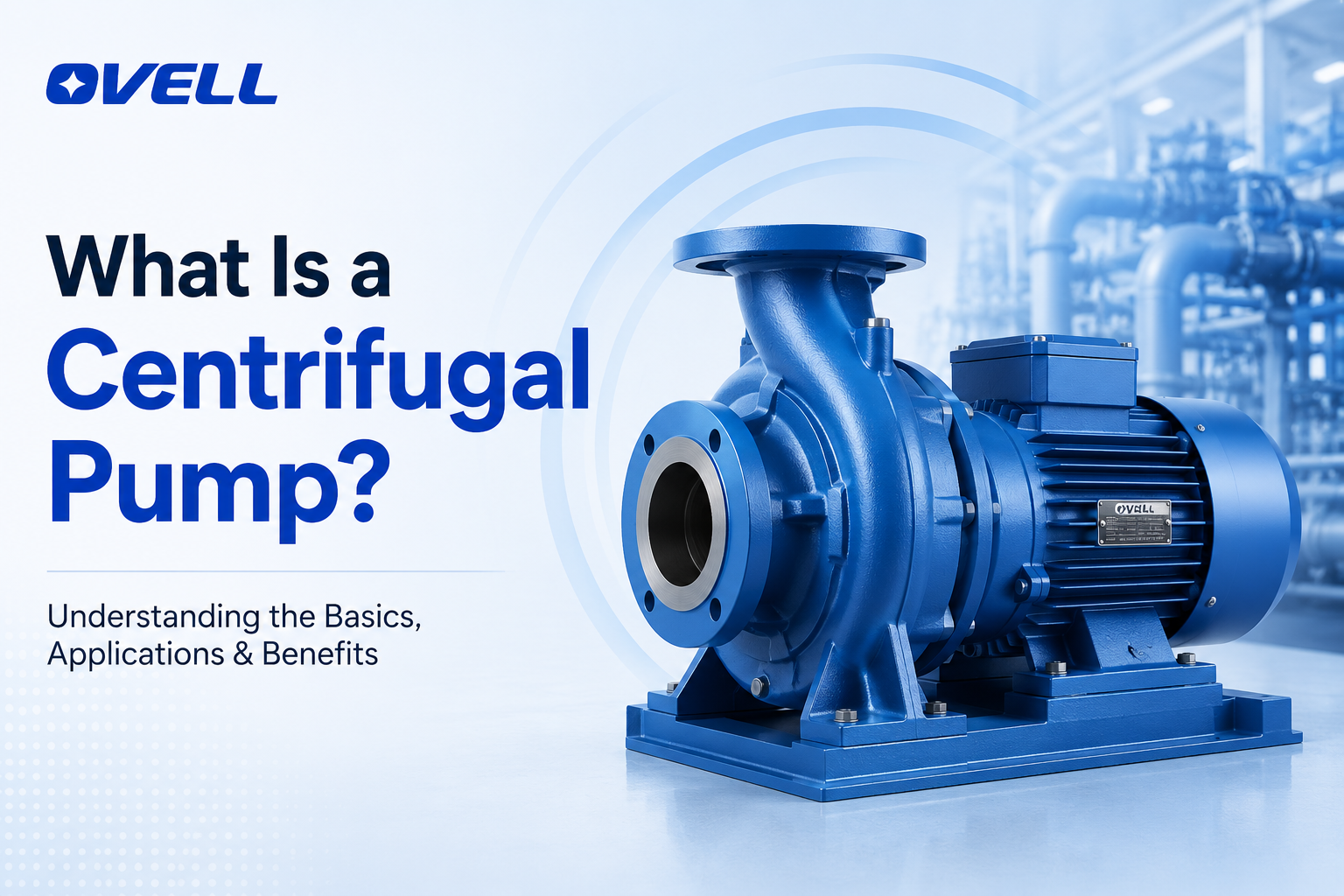
A centrifugal pump is one of the most widely used technologies for industrial liquid movement. Understanding what is a centrifugal pump, how it works, and where it performs best is essential when selecting equipment for industrial fluid transfer.
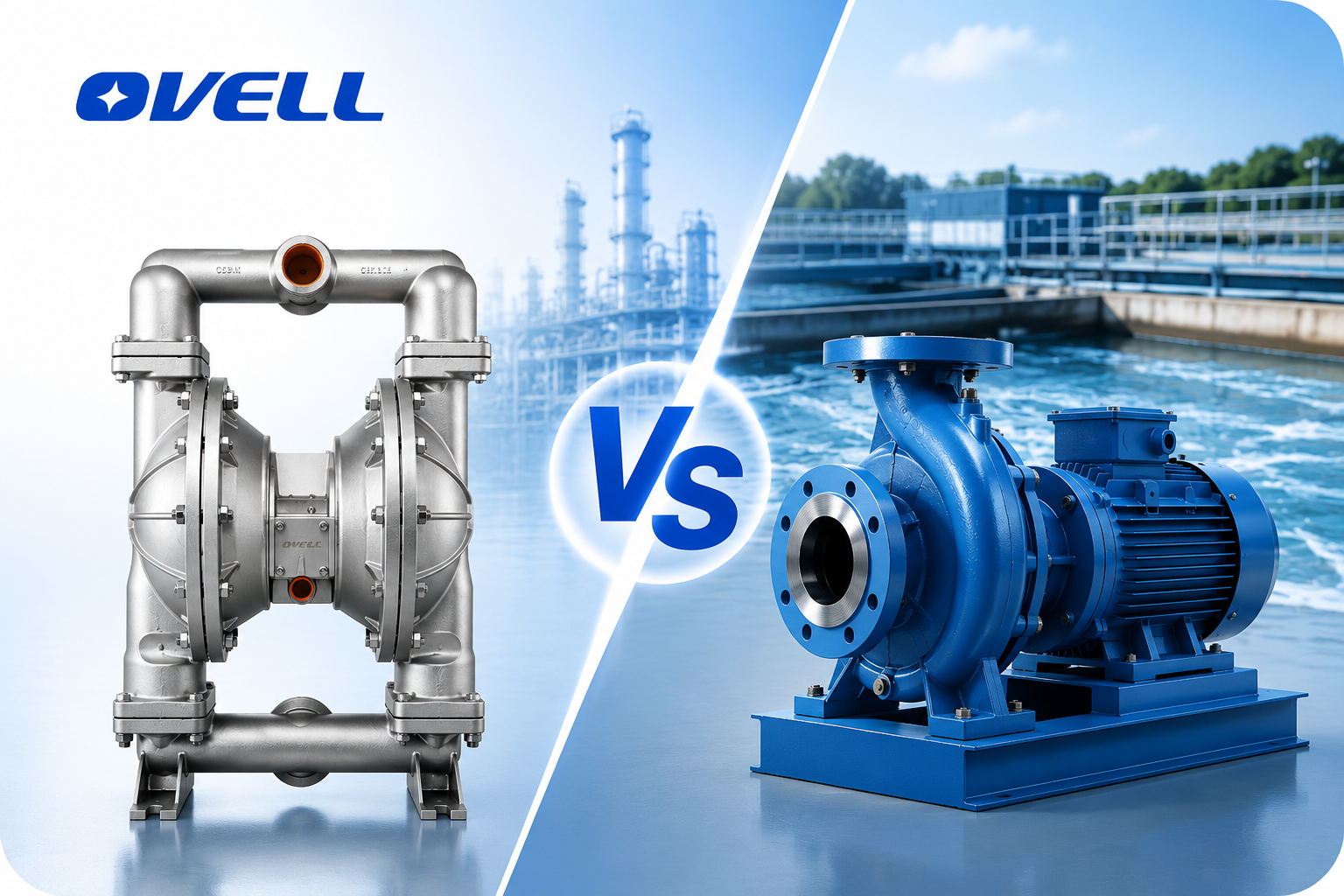
At the same time, many industries comparing a centrifugal pump with a diaphragm pump or air operated double diaphragm pump (AODD pump) want to understand when each solution is most effective.
A centrifugal pump is commonly used for high-flow liquid movement in stable systems, while an air operated double diaphragm pump is often selected for abrasive, corrosive, viscous, or solids-heavy fluids. Understanding these differences helps engineers, maintenance teams, and buyers make better pump selection decisions.
In this guide, we explain what a centrifugal pump is, review the centrifugal pump working principle, explore strengths and limitations, and explain why many industrial facilities ultimately choose a diaphragm pump or AODD pump for demanding applications.
A centrifugal pump is a mechanical device designed to move liquid using rotational energy.
In simple terms, the pump uses a rotating impeller to transfer energy into fluid movement.
As liquid enters the pump casing, a spinning impeller increases fluid velocity and pressure, pushing liquid toward the discharge outlet.
Because of this operating principle, an industrial centrifugal pump works especially well for:
Unlike a diaphragm pump, which transfers liquid through displacement, a centrifugal pump depends on velocity and flow momentum.
This distinction becomes important when pumping difficult fluids.
A centrifugal pump is frequently found in:
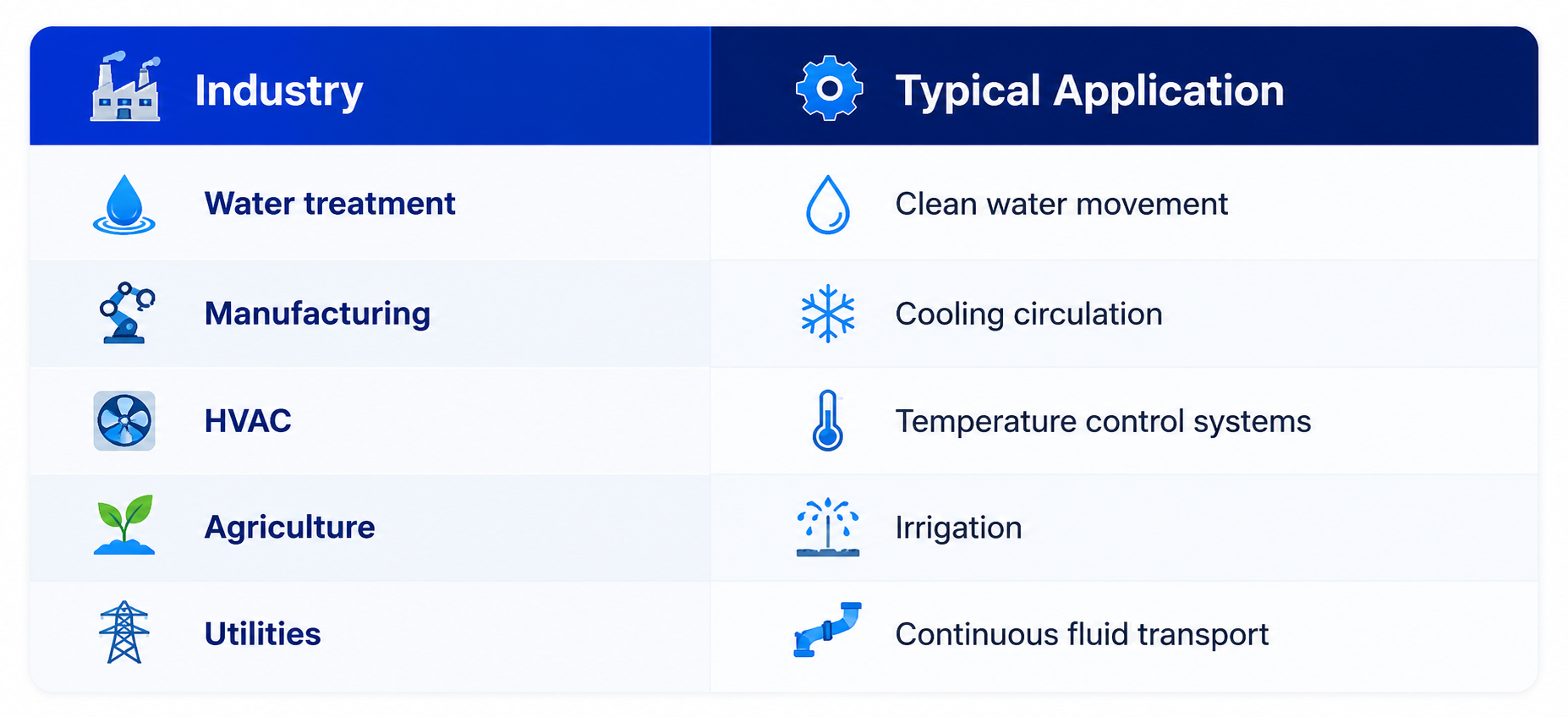
Because they support continuous operation and high flow rates, centrifugal systems remain a standard solution for clean-liquid movement.
However, certain industrial applications require alternative technologies.
For example, many facilities handling sludge, corrosive chemicals, or abrasive slurry later transition toward a diaphragm pump or AODD pump solution.
Understanding how does a centrifugal pump work begins with its rotating impeller.
The centrifugal pump working principle relies on centrifugal force.
Liquid enters through the suction inlet and moves toward the rotating impeller.
As the impeller spins:
The faster the impeller rotates, the greater the liquid movement.
This makes a centrifugal pump highly effective for:
Most industrial systems contain the following components:

Compared with an industrial diaphragm pump, a centrifugal design generally contains more high-speed mechanical components.
This difference affects maintenance requirements and fluid compatibility.
A simplified process looks like this:
Step 1: Liquid Enters the Pump
Fluid enters through the suction line.
Step 2: Impeller Rotation Generates Velocity
The impeller spins rapidly, increasing fluid velocity.
Step 3: Pressure Converts Velocity into Flow
The casing converts velocity into discharge pressure.
Step 4: Continuous Fluid Transfer Occurs
Liquid exits continuously through the discharge line.
Because of this design, a centrifugal pump performs best when liquid conditions remain stable and predictable.
Despite newer pump technologies, centrifugal systems remain popular for good reason.
A centrifugal pump offers several advantages in industrial environments.
One of the biggest advantages is high-volume movement.
A centrifugal pump works especially well as a:
Industries needing uninterrupted liquid movement often depend on centrifugal technology.
Unlike some positive displacement systems, a centrifugal pump handles long-duration continuous operation efficiently.
Typical examples include:
For clean-fluid systems, centrifugal equipment may involve lower upfront investment costs.
Maintenance can also remain relatively predictable when fluid quality is stable.
Because centrifugal technology is common, replacement parts and service support are often easy to find.
For general-purpose liquid movement, this simplicity offers practical value.
However, no pump technology works perfectly in every condition.
And this is where industrial fluid characteristics become important.
Although a centrifugal pump performs well for clean and continuous transfer, limitations begin to appear when fluids become difficult.
Many industrial facilities encounter problems when pumping:
In these situations, an industrial diaphragm pump or air operated double diaphragm pump often becomes a better solution.
A centrifugal pump depends on velocity.
As viscosity increases, pumping efficiency often decreases.
This becomes problematic for:
A pump for viscous fluids usually benefits from displacement-based technology.
For this reason, many manufacturers switch to a diaphragm pump for thick liquids.
Facilities needing a chemical transfer pump often face corrosion risks.
A centrifugal pump may require expensive sealing systems and careful material compatibility planning.
Meanwhile, an air operated double diaphragm pump can often provide stronger corrosion resistance using materials such as:
This makes a diaphragm pump a preferred pump for corrosive chemicals in many industrial facilities.
Wastewater systems create another challenge.
A traditional centrifugal pump may struggle with:
A wastewater diaphragm pump, by comparison, often handles solids more effectively.
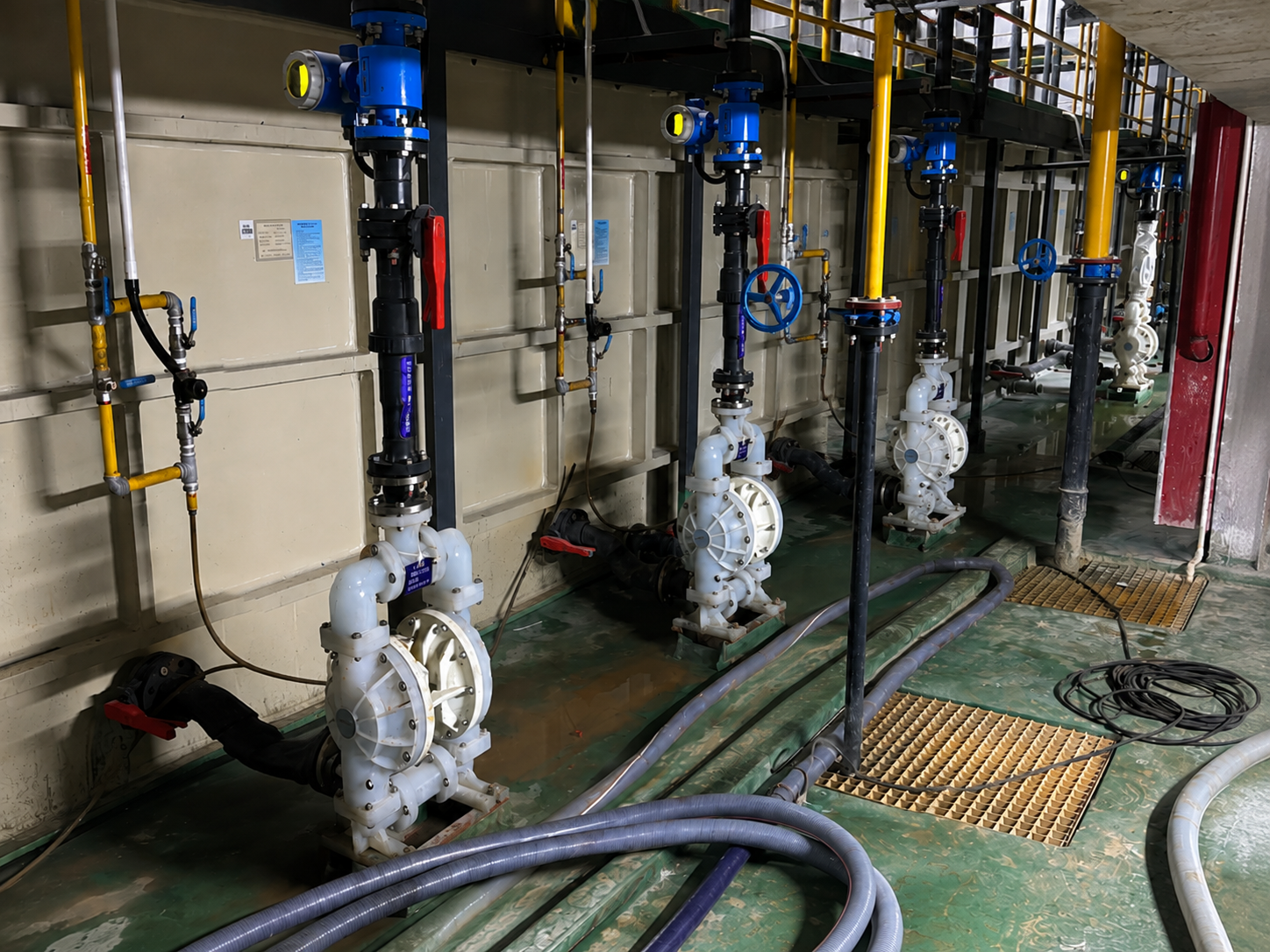
This explains why many facilities adopt an AODD pump for sludge transfer or wastewater treatment.
A centrifugal pump generally should not run dry.
Without fluid lubrication and cooling, mechanical damage may occur.
In contrast, many facilities prefer an AODD pump because it functions as a dry run pump and tolerates intermittent no-flow conditions more safely.
A common question in industrial fluid transfer is:
When is a diaphragm pump better than a centrifugal pump?
The answer depends on fluid type and operating conditions.
A diaphragm pump often becomes the better option when applications involve:
Unlike a centrifugal pump, which depends on continuous liquid flow and high-speed impeller rotation, an industrial diaphragm pump uses displacement action to move fluid more consistently in difficult environments.
In a diaphragm pump vs centrifugal pump comparison, diaphragm technology typically performs better when fluid conditions become more demanding.
For example:
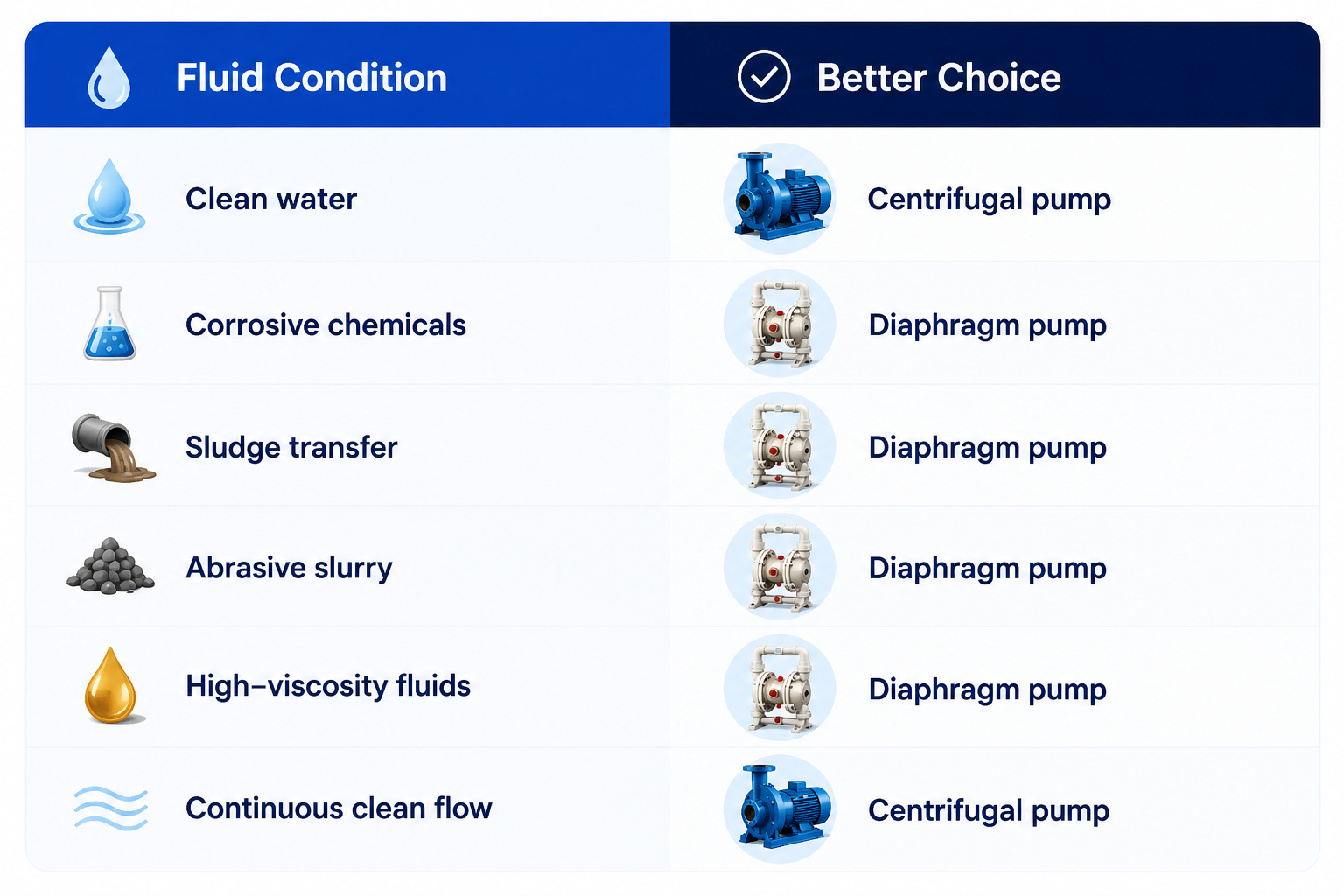
This explains why many facilities begin with centrifugal systems but later adopt a diaphragm pump as production conditions become more complex.
An industrial diaphragm pump offers several important advantages:
For industries handling wastewater, chemicals, or slurry, these features often outweigh the higher flow capacity of a centrifugal pump.
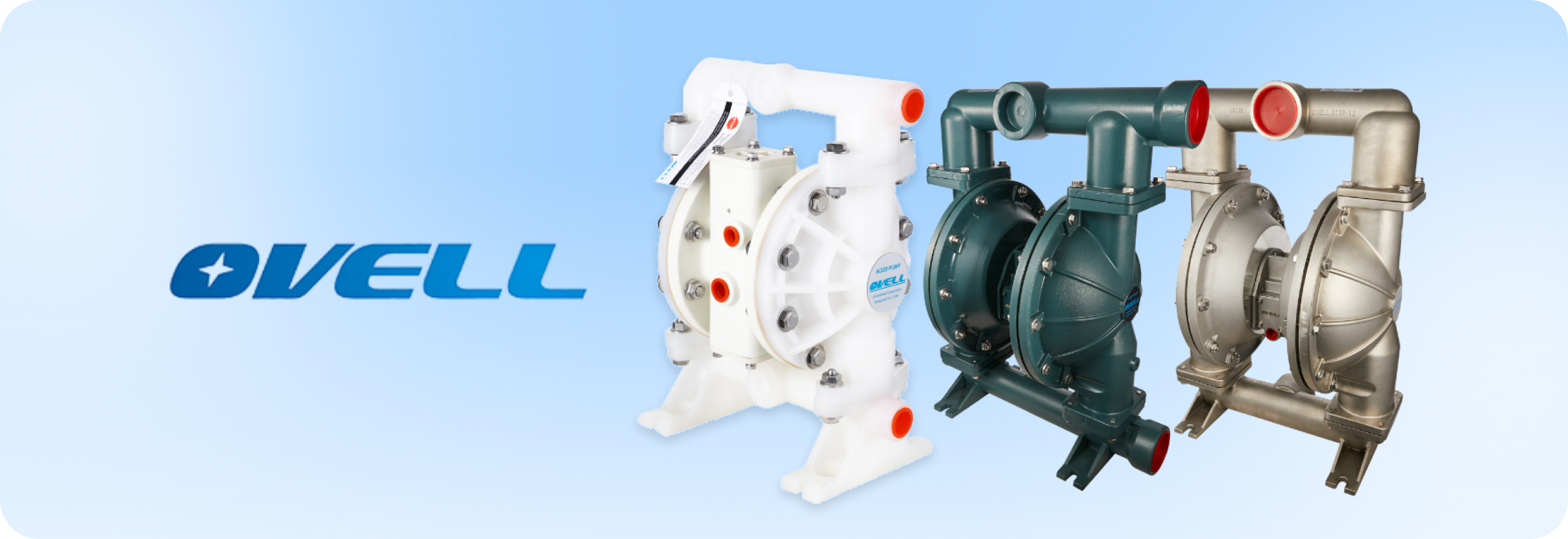
Among diaphragm technologies, the AODD pump (air operated double diaphragm pump) has become one of the most widely used solutions for industrial transfer.
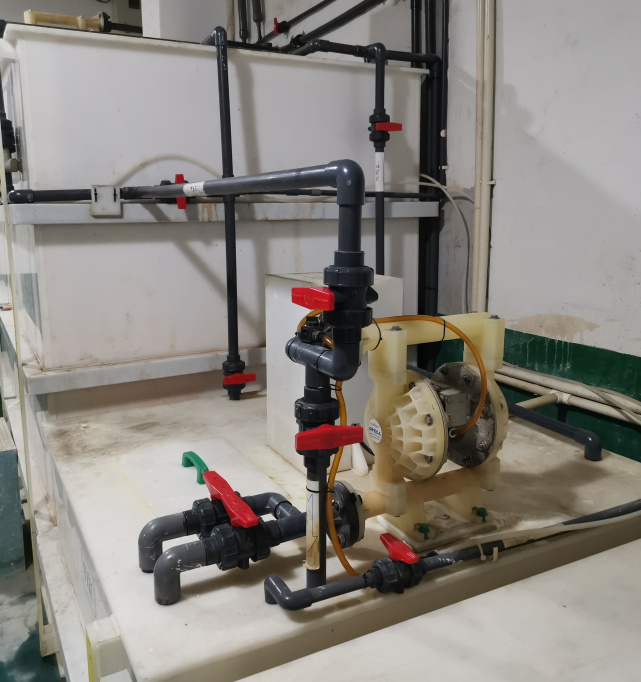
An air operated double diaphragm pump is a type of diaphragm pump powered by compressed air.
Because it combines durability, simplicity, and flexibility, many industrial operations choose an AODD pump over centrifugal systems for demanding applications.
One of the biggest reasons facilities move away from a centrifugal pump is dry-running risk.
A centrifugal pump generally depends on liquid for lubrication and cooling.
Without fluid flow:
An AODD pump, however, works as a dry run pump and can tolerate intermittent no-flow operation much better.
This becomes valuable in:
Another reason many facilities choose an air operated double diaphragm pump is self-priming capability.
A self priming pump helps operations:
This is especially useful in industrial environments where fluid levels fluctuate.
Need a chemical transfer pump?
An AODD pump often becomes the preferred choice for corrosive media.
Material options such as:
allow stronger resistance against aggressive chemicals.
This makes an air operated double diaphragm pump highly effective as:
For wastewater and mining systems, solids tolerance matters.
An AODD pump commonly works as a:
Compared with a traditional centrifugal pump, diaphragm technology often experiences less clogging risk.
A pump for viscous fluids often benefits from displacement technology.
Applications include:
Because an air operated double diaphragm pump moves fluid through reciprocating action instead of velocity, viscosity becomes less problematic.
For a complete overview of industrial use cases, see:
Top 7 Industrial Applications of AODD Pumps in Chemical, Wastewater & Mining Industries
If you are deciding between a centrifugal pump and an AODD pump, focus on application requirements rather than popularity.
A good pump selection process begins with one question:
What kind of fluid are you moving?
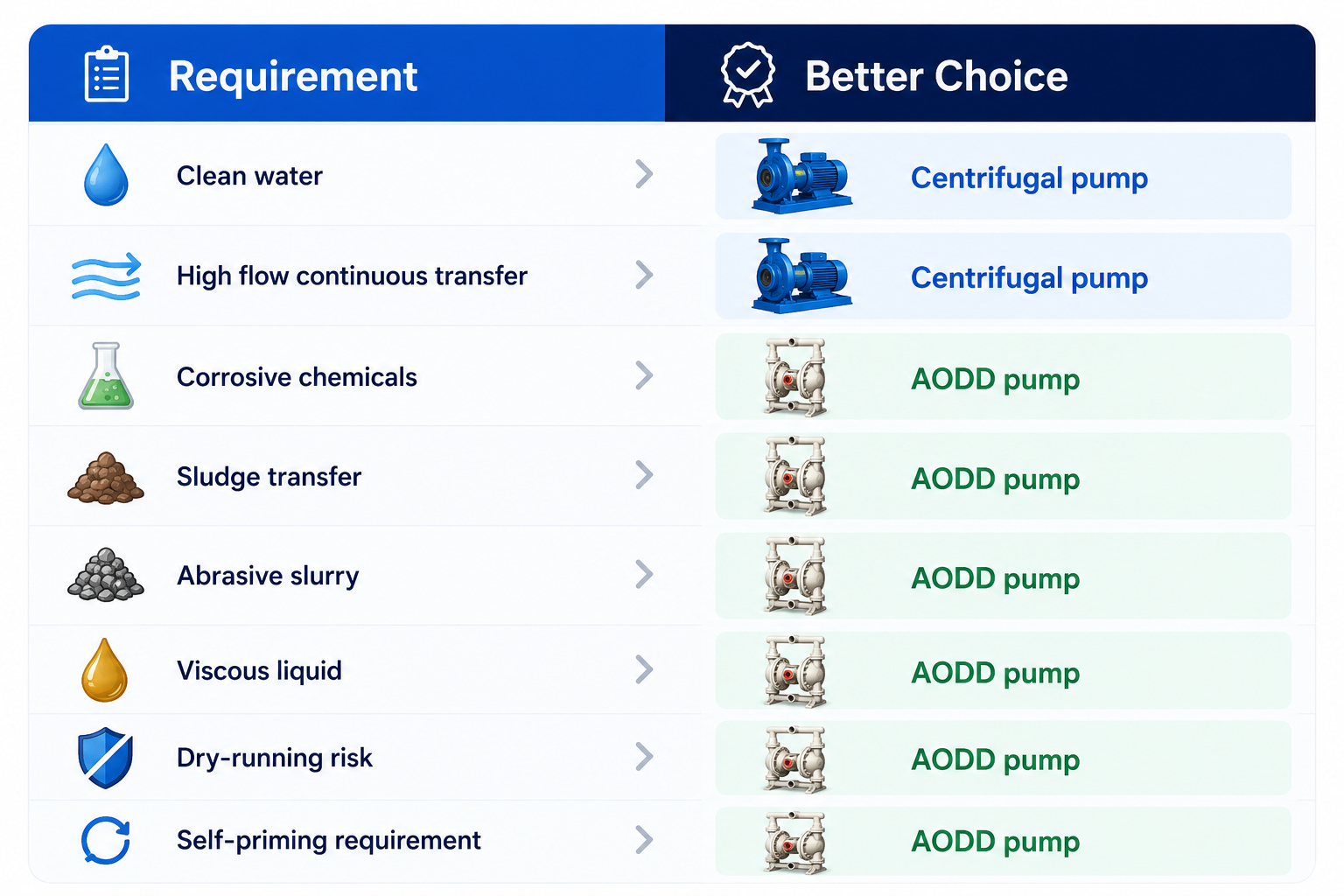
In many industrial operations, the real decision is not: Which pump is better?
Instead ask: Which pump is better for this fluid?
For facilities handling difficult liquids, the answer increasingly becomes: AODD pump
For a more detailed technical comparison, explore:
AODD Pump vs Centrifugal Pump: Which One Is Better for Industrial Fluid Transfer?
1. What is a centrifugal pump?
A centrifugal pump is a pump that transfers liquid through a rotating impeller that generates flow velocity and pressure.
2. How does a centrifugal pump work?
The centrifugal pump working principle uses impeller rotation to accelerate liquid and convert velocity into flow.
3. Can centrifugal pumps run dry?
Generally, no.
A centrifugal pump should not operate dry because overheating and seal failure may occur.
4. Is a diaphragm pump better than a centrifugal pump?
A diaphragm pump vs centrifugal pump comparison depends on the application.
A diaphragm pump often performs better for:
while centrifugal systems perform well for clean, continuous, high-flow liquid movement.
5. What pump is best for corrosive chemicals?
An air operated double diaphragm pump is often preferred as a chemical transfer pump because of corrosion resistance and chemical compatibility.
6. Can AODD pumps handle sludge?
Yes.
An AODD pump commonly functions as a wastewater diaphragm pump or sludge transfer pump.
7. Why are AODD pumps used for wastewater treatment?
An AODD pump works well for wastewater because it tolerates solids, sludge, dry running, and abrasive media.
Understanding what is a centrifugal pump helps industrial buyers make smarter fluid transfer decisions.
A centrifugal pump remains an excellent solution for clean liquids, high-flow systems, and stable continuous processes.
However, limitations begin to appear when fluid conditions become more demanding.
For corrosive chemicals, abrasive slurry, wastewater sludge, or thick liquids, an industrial diaphragm pump or air operated double diaphragm pump (AODD pump) often provides stronger reliability and operational flexibility.
Compared with many centrifugal systems, an AODD pump offers important advantages such as:
Looking for a pump for corrosive, viscous, abrasive, or solids-heavy fluids? Explore our diaphragm pump solutions to find the right equipment for chemical transfer, wastewater treatment, mining, and demanding industrial fluid applications.

.png)