Mon - Fri: 9:00 - 19:00 / Closed on Weekends

AUS: +61 431 085 666
USA: +64 21 480 290


OVELL diaphragm pumps can be considered for transferring cleaning fluids, recovered wash liquid, sludge and wastewater in tank-cleaning systems. Selection must be based on the actual liquid and system duty.
This guide explains the main engineering considerations for these applications. Cleaning performance depends on the complete system, including the cleaning method, fluid properties, piping and required flow and pressure.
Before selecting a pump, identify the cleaning chemicals, their concentrations and temperatures, the expected solids, and the required flow at the actual discharge pressure. Also establish suction conditions and whether the pump will handle fresh cleaning solution, recovered liquid or both.
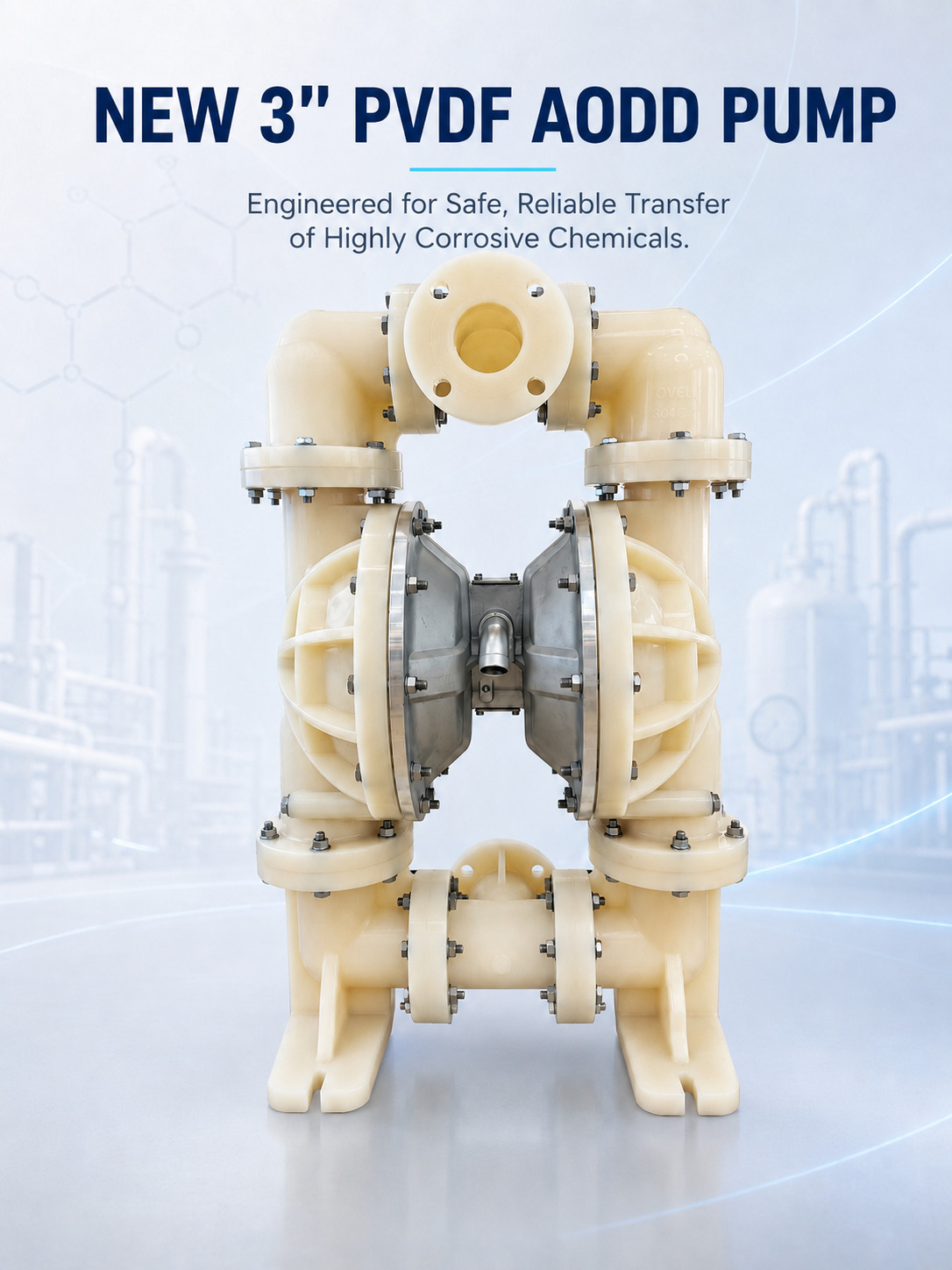
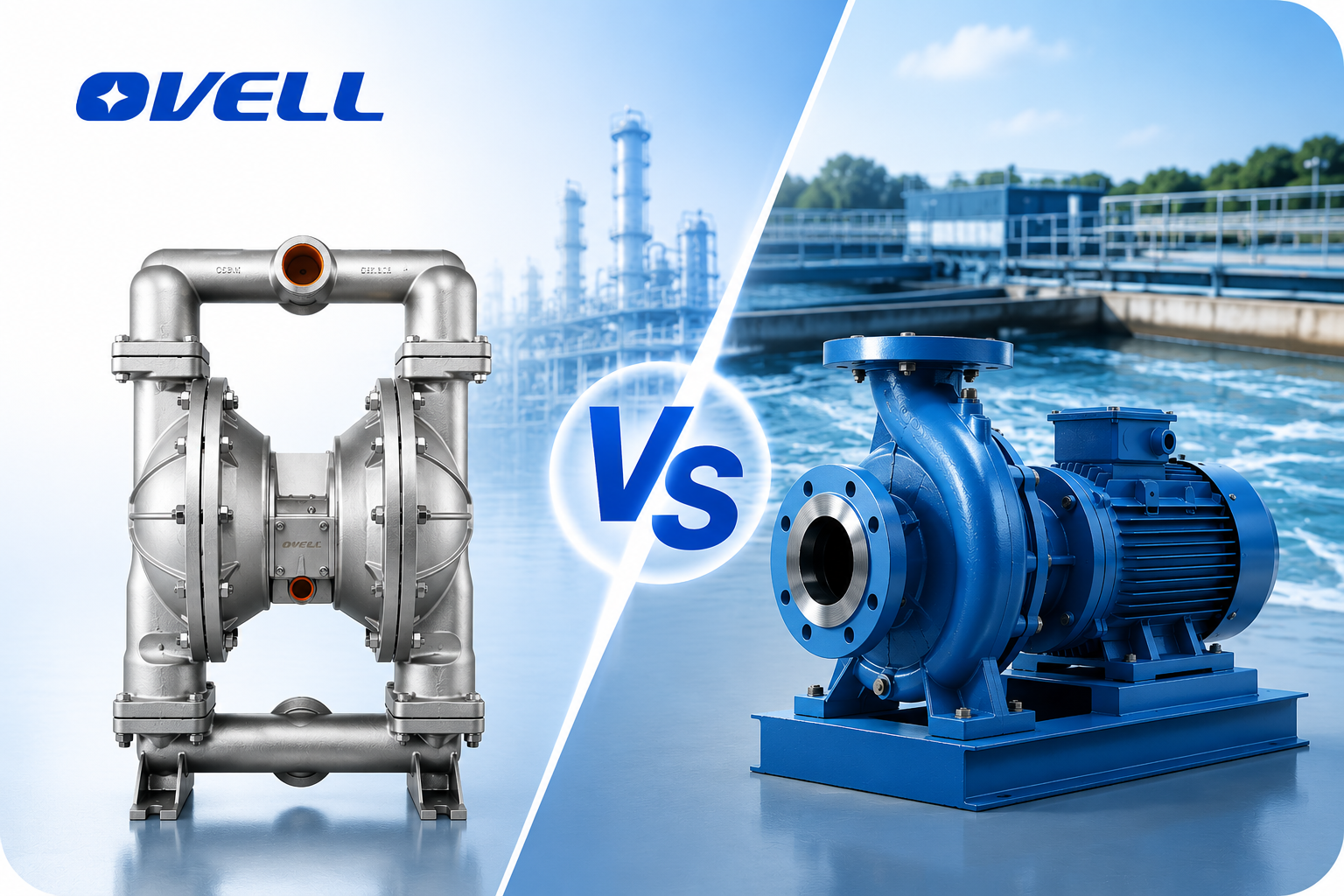
Air-operated double-diaphragm pumps use compressed air to provide positive-displacement pumping. Their self-priming capability and suitability for viscous or solids-containing fluids depend on the selected configuration and operating conditions.
Dry-run capability must be used within the model's instructions; avoid unnecessary dry cycling. AODD output is pulsating and varies with backpressure, air supply and fluid properties. Where the process needs smoother delivery, evaluate a suitable pulsation dampener and controls.
An AODD design avoids a rotating shaft seal, but it is not a guarantee against leakage. Inspect diaphragms, seals, joints and fasteners. A diaphragm rupture can allow liquid to enter the air side and leave through the exhaust, so assess exhaust routing and suitable containment.
Air operation alone does not establish suitability for flammable cleaning fluids or classified hazardous areas. Confirm the required material compatibility, pump construction, applicable certification, grounding, bonding and ventilation for the complete installation.
During commissioning, check flow at the actual pressure, confirm stable suction and inspect for liquid or air leaks. Set air pressure to the required duty and include compressed-air consumption when assessing operating costs.
For water and wastewater applications, OVELL can review the fluid composition, required flow and pressure, solids characteristics and installation conditions to help identify an appropriate pump configuration.