Mon - Fri: 9:00 - 19:00 / Closed on Weekends

AUS: +61 431 085 666
USA: +64 21 480 290


.svg)


Positive displacement pumps are widely used to transfer chemicals, slurries, viscous liquids and other demanding fluids. However, their reciprocating or compression-based operating principles can generate pulsating flow and pressure fluctuations in the discharge pipeline.
A properly selected pulsation dampener absorbs pressure peaks and releases stored energy when pipeline pressure falls. This helps stabilize discharge flow, reduce vibration and protect downstream piping, valves, instruments and process equipment.
The following field installations demonstrate how diaphragm pulsation dampeners can be integrated with AODD pumps and hose pump systems.
An air operated double diaphragm pump uses two diaphragms that move alternately. While one liquid chamber discharges fluid, the other chamber fills. This alternating movement naturally creates variations in instantaneous flow and discharge pressure.
A hose pump, also known as a peristaltic pump, transfers fluid by progressively compressing a flexible hose with rotating shoes or rollers. The repeated compression and recovery of the hose can also create noticeable discharge pulsation.
Without suitable pulsation control, these pressure variations may cause:
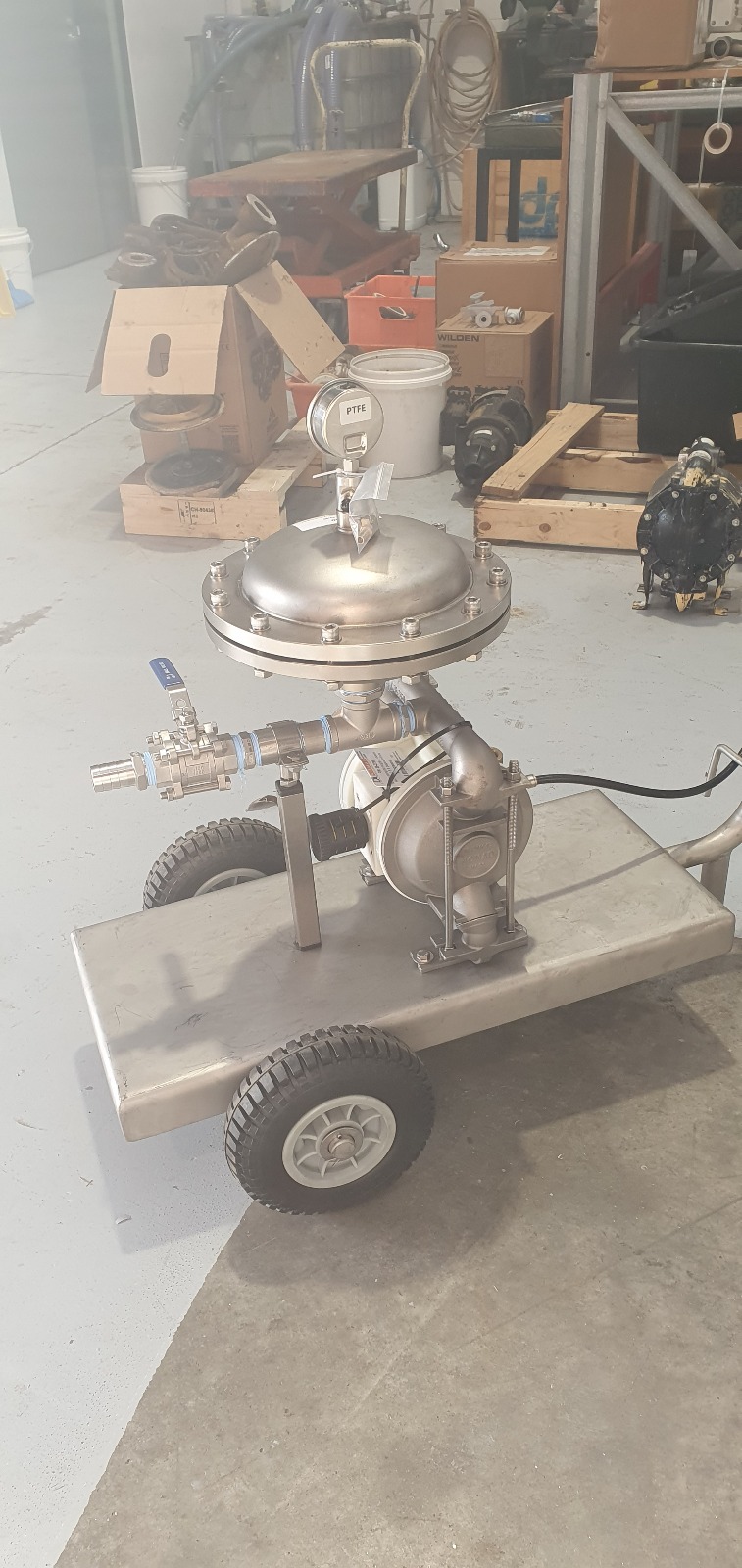
This mobile fluid-transfer unit combines an air operated double diaphragm pump with a stainless steel diaphragm pulsation dampener installed close to the pump discharge.
Positioning the dampener near the discharge connection allows it to respond quickly to pressure changes generated during each diaphragm cycle. This arrangement helps create a smoother discharge flow and reduces vibration throughout the connected pipeline.
The installation also includes a pressure gauge, isolation valves and stainless steel piping. These components allow the system pressure to be monitored and make inspection or maintenance more convenient.
A pulsation dampener can support AODD pump systems used for:
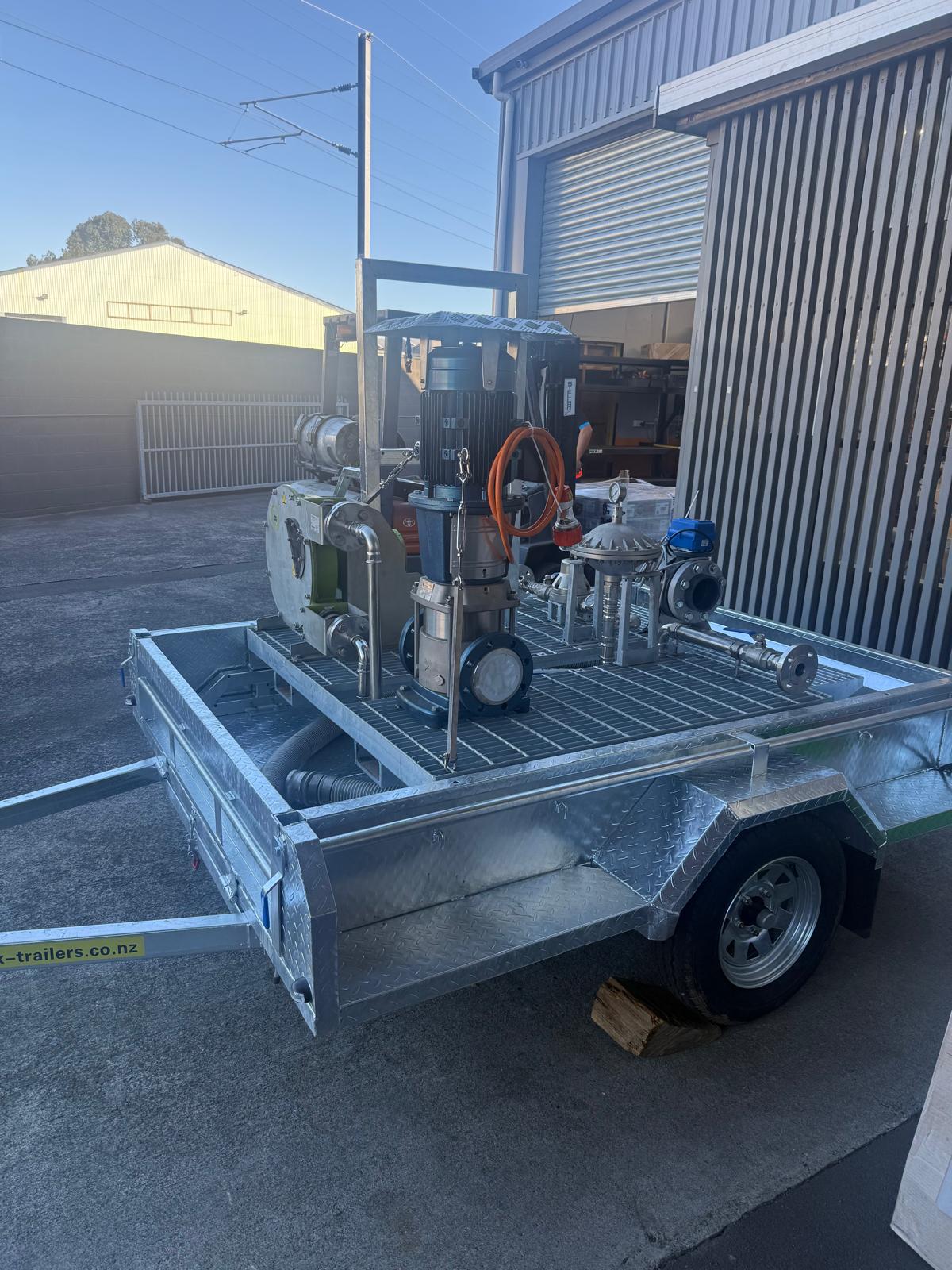
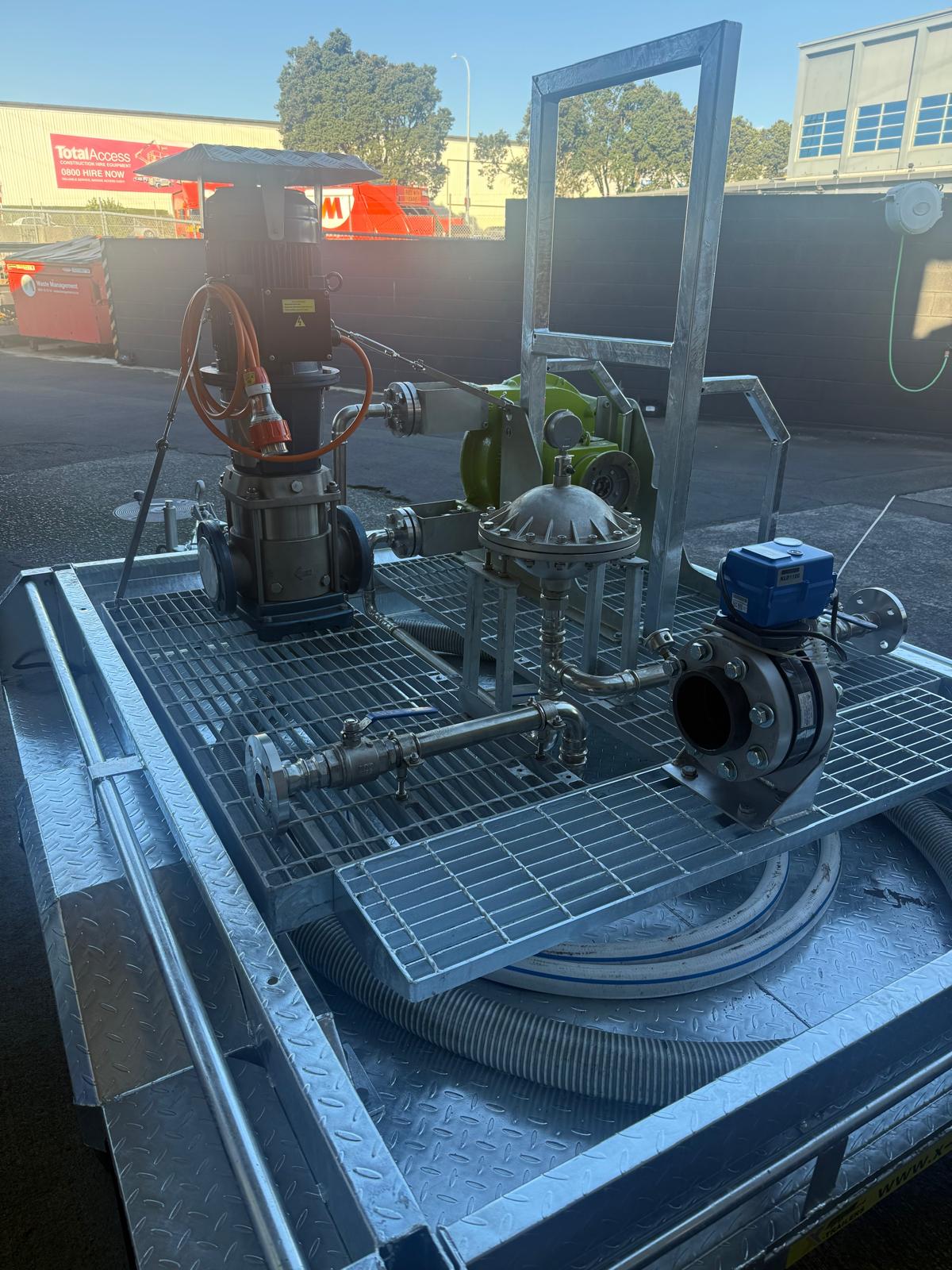
The field installation shown above combines a hose pump with a diaphragm pulsation dampener on a mobile trailer-mounted transfer system.
Hose pumps are commonly selected for abrasive slurries, viscous liquids and fluids containing suspended solids. Their hose-compression cycle can create pressure fluctuations in the discharge line. Installing a pulsation dampener helps absorb these fluctuations and provides more stable conditions for the pipeline and downstream equipment.
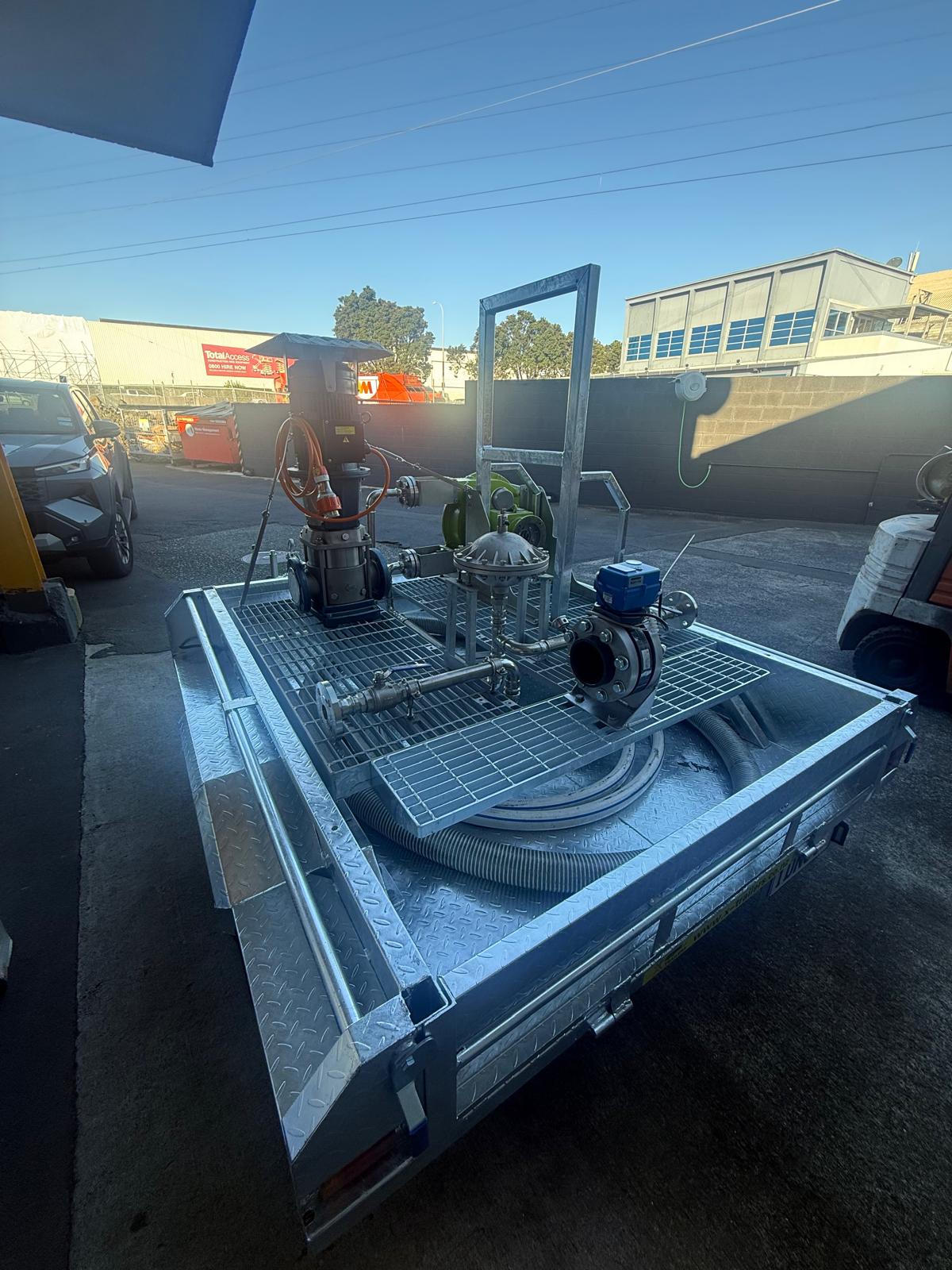
The pulsation dampener is positioned close to the pump discharge and before downstream components that may be affected by pressure variation.
The effectiveness of a dampener depends strongly on its installation position. Whenever practical, it should be installed close to the discharge outlet and before flowmeters, pressure sensors, filters or control valves.
The dampener absorbs part of the pressure peak produced during each pumping cycle and releases stored energy as the pressure decreases.
Reducing pulsation helps create more consistent flow through the pipeline. This is particularly valuable in dosing, filtration, spraying, filling and other controlled processes.
Flowmeters, pressure gauges and sensors may provide unstable readings when exposed to strong pulsation. A properly sized dampener can improve instrument stability.
Repeated pressure fluctuations can place additional mechanical stress on pipes, fittings, valves and supports. Reducing pulsation helps limit vibration and protect downstream components.
Pipeline movement and rapid pressure changes can create noticeable noise. A dampener can help the pumping system operate more smoothly and quietly.
A pulsation dampener should be selected according to the actual pump and process conditions. Important factors include:
The dampener body, diaphragm and sealing materials must be compatible with the transferred fluid. Stainless steel, polypropylene and other material combinations can be selected for different chemical and industrial applications.
Correct charging or operating pressure is also essential. An incorrectly adjusted dampener may provide limited pulsation reduction even if its physical size appears suitable.
For effective pulsation control, the dampener should generally be:
The final installation should always be evaluated according to the pump operating conditions, fluid properties and complete piping arrangement.
OVELL supplies diaphragm pulsation dampeners for AODD pumps, hose pumps, metering pumps and other positive displacement pumping systems.
Different body materials, diaphragm options and connection configurations are available for chemical processing, water treatment, coatings, mining, battery production, food processing and general industrial fluid-transfer applications.
A correctly selected pulsation dampener can improve flow stability, reduce pipeline vibration and protect critical process equipment.
Contact OVELL with your pump model, flow rate, discharge pressure, fluid properties and pipeline arrangement. Our team can help select a suitable pulsation dampener for your application.

.png)